Smart Tips for Selecting a Bed Base
Choosing a mattress gets most of the attention but the bed base underneath it often decides whether that mattress actually performs the way you paid for it to. That matters more than many buyers realise. In CDC data the share of U.S. adults getting insufficient sleep ranged from 30% to 46% by state in 2022 and the National Sleep Foundation’s 2025 Sleep in America poll found that 75% of adults said good quality sleep has a positive effect across major areas of life such as happiness, productivity, goal achievement and social life. In other words, sleep is not a “nice to have issue and the support system under your mattress is part of that equation.
A bed base affects more than whether your bed looks modern or traditional. It changes how your mattress feels how evenly weight is distributed how much airflow reaches the mattress, how much storage you gain and in some cases whether your warranty remains valid. Major manufacturers now spell this out clearly Tempur Pedic, Purple and Saatva all specify slat spacing rules in the 3.5-to-4-inch range while Sealy says new mattress owners should pair their mattress with a flat foundation or an adjustable base rather than assume any old setup will do.
Start with mattress compatibility not bed frame style
The smartest way to shop for a bed base is to stop thinking of it as separate furniture. A mattress and base are a sleep system. If the two are mismatched even a premium mattress can feel unsupportive, sleep warmer or wear unevenly.
Foam, latex and hybrid mattresses usually need tighter support
This is where many shoppers go wrong. Modern foam and latex models are more sensitive to gaps underneath than older spring mattresses. Tempur Pedic says slats should generally be at least 3 inches wide and no more than 4 inches apart. Purple says slats should be no more than 3.5 inches apart. Saatva’s warranty language allows a solid surface or slats spaced less than 4 inches apart and Emma specifies slatted frames with spacing no wider than 7 cm for one of its current UK models. The pattern is clear today’s mattresses often need closer more consistent support than buyers expect.
Traditional box springs are no longer the safe default
A lot of shoppers still assume every mattress belongs on a box spring. That used to be a reasonable shortcut. It is not anymore. Sealy explicitly frames the modern choice as a flat foundation or adjustable base and Purple notes that a traditional box spring is not the right support for some of its mattresses. That does not mean box springs are obsolete in every case; it means you should check the mattress maker’s requirements before reusing one you already own.
Adjustable bases have moved from niche to mainstream
Adjustable bases used to be associated mostly with medical or specialty sleep products. They are now much more mainstream. Grand View Research estimates the global adjustable bed frames market at about $4.38 billion in 2024 with projected growth to $8.61 billion by 2033. At the same time, current brand guidance shows why Nectar’s 2025 buying guide says memory foam latex and certain hybrid mattresses usually work well on adjustable frames while traditional innerspring models are often less compatible.
Measure the room before you choose the base type
A bed base is not just a support decision. It is a space planning decision.
That matters because buyers are trying to do more with the same or even less square footage. NAHB reported in January 2026 that the median floor area of new U.S. single family homes was 2,176 square feet in third quarter 2025 continuing a broader pattern of pressure on space and affordability. In practice that makes multifunctional furniture more valuable especially in bedrooms that also have to absorb storage dressing space or occasional work from home use.
Think in three dimensions not one
Most people measure only width and length. Smart buyers also check height and access.
A simple rule of thumb from bedroom planning experts is to leave roughly 24 to 36 inches of circulation space where people need to walk comfortably around the bed. That matters because some bases save space on paper but waste it in real life. For example, drawer storage is useful only if the drawers can fully open. In a tight room a lift up ottoman or an under bed clearance frame may work better than side drawers.
Height also changes the experience of the room. A low-profile platform bed can make a compact bedroom feel less bulky. A taller base can make getting in and out of bed easier, especially for older adults or anyone who dislikes a very low sleeping position. The right choice depends on how the room is used not just how the bed looks in a product photo.
Know the strengths and trade offs of each bed base style
Here is the practical version buyers usually need
-
Slatted base Good for airflow lighter construction and compatibility with many modern mattresses when the slats are close enough together. Casper notes that slatted bases are breathable while manufacturers such as Tempur Pedic and Purple stress that spacing must meet mattress requirements.
-
Solid platform or solid top base Best when you want a firmer more uniform feel with less flex under the mattress. Casper describes solid bases as providing firm uniform support and added stability.
-
Foundation or modern box base A good choice when your mattress brand specifically recommends a flat foundation or when you want to raise overall bed height without moving to a bulky frame. Sealy explicitly positions flat foundations as part of the proper support system for new mattresses.
-
Adjustable base Best for shoppers who want head and foot elevation, preset positions, or a more custom sleep setup. Market growth and current retail offerings suggest this category is gaining traction especially with foam and hybrid mattresses.
The key is not deciding which type is best in general. It is deciding which one is best for your mattress your room and your routine.

Check the hidden specs that most buyers miss
This is where expensive mistakes happen.
Slat spacing and center support
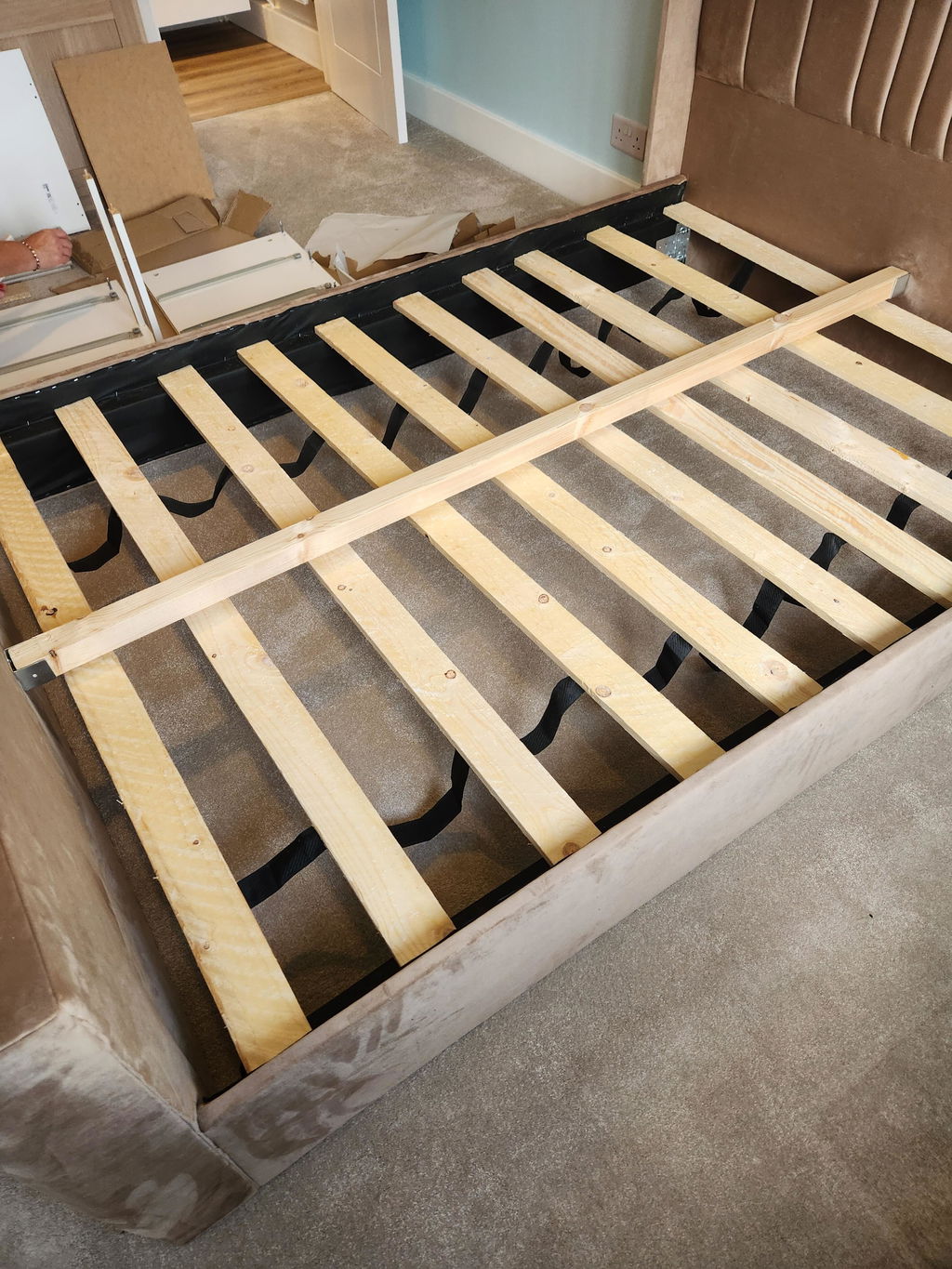
Bed base listings often advertise style before structure. That is backwards. The first questions should be how far apart are the slats and is there center support? Saatva’s warranty requires center support for queen and larger sizes and Purple also highlights structural support expectations for larger slatted frames. That is not a minor detail. It is part of whether the mattress stays properly supported over time.
Warranty language
A bed base is not just a furniture purchase it can become evidence if you ever file a claim. Tempur Pedic and Sealy both state that they may require proof of the quality of the frame foundation or base used with the mattress if a warranty claim is made. That means a good enough base from an old setup may cost more than it saves if it fails the manufacturer’s requirements later.
Airflow versus locked in firmness
There is no universally superior answer here. Slatted bases tend to allow more airflow which can help with breathability. Solid bases usually create a more uniform feel. If you sleep hot or live in a warmer more humid climate airflow may matter more. If you dislike any sense of flex under the mattress a solid platform may feel better. The smartest choice is the one that matches your comfort priorities not the one that wins on trend alone.
A smart shortlist before you buy
Use this checklist before placing the order:
-
Check the mattress manufacturer’s approved support types first. Do not assume your current base qualifies.
-
Confirm slat spacing in writing. For many modern mattresses, that means roughly 3.5 to 4 inches maximum, sometimes tighter.
-
Measure walking space not just mattress size. A bed that technically fits can still make the room frustrating to use.
-
Think about storage access. Drawers need swing room lift-up storage needs top clearance open under bed space needs containers that actually fit.
-
Check total bed height. Add mattress thickness to base height before you buy.
-
For queen, king and larger sizes, verify center support and load handling. This is one of the easiest details to miss and one of the most important for durability.
-
Keep screenshots or PDFs of the support requirements. That makes future warranty discussions easier.
Why this matters more now than it did a few years ago
The bedroom is becoming a higher value buying category, not a forgotten utility space. Grand View Research valued the global bedroom furniture market at $266.15 billion in 2024 and projects it to reach $383.12 billion by 2030. That growth reflects a broader shift people increasingly expect bedroom furniture to deliver comfort, storage, aesthetics and function at the same time. A bed base sits at the centre of all four.
Conclusion
Selecting a bed base well is less about chasing one best option and more about making a precise match. The right base supports the mattress properly fits the room without choking circulation delivers the storage or flexibility you actually need and protects the value of the mattress above it. The wrong one can quietly undermine comfort from the first night and create warranty problems later.
The future of bed base buying is clearly moving toward smarter more specialised choices: tighter compatibility rules more multifunctional designs and faster growth in adjustable systems. Buyers who treat the base as part of the sleep system, rather than an afterthought will make better decisions and get more from every pound or dollar they spend. If you want I can also turn this into a more UK focused SEO blog version with a meta title and meta description.
FAQs
What is a bed base and why is it important?
A bed base is the support structure placed under your mattress. It helps distribute weight evenly, improves comfort supports mattress performance and can affect durability, airflow and even warranty coverage.
Does the type of bed base really affect how a mattress feels?
Yes. A solid platform base can make a mattress feel firmer and more stable, while a slatted base may allow slightly more flex and airflow. The wrong base can change the comfort level of your mattress.
Are all mattresses compatible with every bed base?
No. Foam, latex, hybrid and spring mattresses often have different support needs. Many mattress brands specify the type of base and slat spacing required to keep the mattress properly supported.
What is the ideal slat spacing for a bed base?
For many modern mattresses, slats should usually be no more than around 3.5 to 4 inches apart. Wider gaps may cause sagging or uneven support over time.
Is a box spring the same as a bed base?
Not exactly. A box spring is one type of support system but many modern mattresses now work better with platform bases foundations or adjustable bases rather than traditional box springs.
What is the best bed base for a small bedroom?
That depends on your needs. In smaller rooms, ottoman style lift up bases or under bed storage frames often work well because they add storage without needing extra floor space for drawers to open.
Are adjustable bed bases worth buying?
They can be worth it for people who want more comfort and flexibility. Adjustable bases are useful for reading, lounging, reducing pressure and creating a more customised sleeping position, especially with compatible foam or hybrid mattresses.
Can the wrong bed base damage a mattress?
Yes. Poor support can lead to sagging, uneven wear reduced comfort and in some cases a rejected warranty claim if the mattress was not used on an approved base.
What should I check before buying a new bed base?
Check mattress compatibility, slat spacing, center support total bed height, storage access, room clearance and the manufacturer’s support guidelines before making a purchase.
How do I choose the right bed base for my room and lifestyle?
Start with your mattress requirements then consider your room size, storage needs, preferred bed height and whether you want added features like adjustability or extra airflow. The best bed base should support both your mattress and your daily routine.