Signs You Need a New Mattress and How to Pick the Best Replacement
A mattress is one of those household items people often keep for too long. It does not usually break overnight. Instead, it slowly loses support, collects wear, develops dips, traps heat and stops helping your body recover properly.
That matters because sleep in the UK is already under pressure. NHS guidance says a healthy adult usually needs around 7 to 9 hours of sleep, yet a 2026 UK sleep survey found that adults average 6.4 hours of actual sleep per night with only 5% saying they always wake refreshed. The same survey found that 75% of people have been woken by pain or discomfort, and 45% experience this at least once a night.
Your mattress is not the only thing that affects sleep, but it is the one factor supporting your body for thousands of hours. The National Bed Federation’s consumer advice notes that a mattress can experience 20,000+ hours of wear over seven years, which is why replacement is not just about comfort it is about support, hygiene and long-term sleep quality.
Why Mattress Replacement Matters More Than People Think
A worn mattress can affect three things at once: spinal alignment, pressure relief and sleep continuity. When support weakens, your hips may sink too far, your shoulders may feel compressed, and your body may start compensating through the night. That can lead to tossing, turning and waking with stiffness.
The UK mattress market is also changing. Mordor Intelligence estimated the UK mattress market at USD 1.45 billion in 2026, with growth expected through 2031. The same analysis highlights demand for pressure-relief models, foam upgrades, online bed-in-a-box buying and sustainability-linked purchasing.
In other words, shoppers are no longer just asking, “Is it soft?” They are asking: Does it support my sleep position? Does it stay cool? Is it safe? Can it be recycled? Will it work with my bed base?
Clear Signs You Need a New Mattress
1. Your Mattress Is Around Seven Years Old or Feels Older
Age alone is not the only test, but it is a useful warning sign. Bed Advice UK recommends replacing a mattress around every seven years, especially if it no longer feels supportive or comfortable. The 2026 UK Sleep Survey found the average mattress in UK bedrooms is already 6.4 years old, up from 6.1 years in 2024.
A high-quality mattress that has been well cared for may last longer. A cheaper or heavily used mattress may lose comfort much sooner, especially if used every night by two adults.
2. You Wake Up Achy, Stiff or Sore
Morning aches are one of the strongest signals that your mattress is no longer doing its job. The key clue is pattern: if your back, hips, shoulders or neck feel worse when you wake up but ease after moving around, your sleep surface may be contributing.
Research supports the idea that mattress firmness matters. A Lancet clinical trial of 313 adults with chronic non-specific low back pain found that medium-firm mattresses produced better outcomes for pain in bed, pain on rising and disability than firm mattresses.
This does not mean everyone should buy the same mattress. It means the old advice “choose the firmest mattress for back pain” is too simplistic.
3. You Can See Dips, Lumps or Uneven Areas
Visible sagging is not just cosmetic. A dip where your hips rest can pull your spine out of neutral alignment. Lumps can create pressure points. If you find yourself rolling into the middle, sliding towards your partner or avoiding certain areas of the bed, the internal structure has likely weakened.
Bed Advice UK lists rolling into the middle, lumps, bumps and loss of support as tell-tale signs that a mattress needs replacing.
4. You Sleep Better Somewhere Else
A simple real-world test: compare your sleep at home with your sleep in a hotel, guest room or friend’s house. If you consistently sleep better away from your own bed, your mattress may be part of the problem.
This is especially revealing when your bedtime routine is the same, but your body feels less stiff and more rested after sleeping on a different mattress.
5. You Overheat or Struggle to Get Comfortable
In the 2026 UK Sleep Survey, 24% of respondents said being too hot disturbed their sleep, while 23% said they struggled to get comfortable and 18% cited neck, hip or lower back pain.
Older foam can soften, compress and retain heat differently over time. If your mattress once felt comfortable but now feels clammy, restrictive or uneven, a more breathable pocket sprung, hybrid or cooling-gel design may suit you better.
6. Your Allergies Feel Worse in Bed
Mattresses collect sweat, skin cells, dust and allergens over years of use. Bed Advice UK notes that mattresses can harbour large numbers of dust mites, particularly when they are old or poorly maintained. It also reports that 44% of British adults suffer from at least one allergy, and 59% of indoor allergy sufferers say symptoms feel worse in the bedroom.
A mattress protector, regular vacuuming and washing bedding help, but they cannot fully rescue a mattress that is old, stained, musty or structurally worn.
7. Your Partner’s Movement Keeps Waking You
If every turn, fidget or roll feels like a wave across the mattress, the bed may lack motion isolation. This is common with older open-coil mattresses or worn-out springs. Couples may benefit from pocket springs, hybrid construction, firmer edge support or a larger size.
Bed Advice UK says a bed should be 10–15cm longer than the tallest partner and advises couples to buy as large a bed as space and budget allow.
Quick Mattress Replacement Check
Consider replacing your mattress if:
-
It is around 7 years old and no longer feels supportive.
-
You wake with recurring back, hip, shoulder or neck pain.
-
You can see sagging, dips, lumps or uneven areas.
-
You roll into the middle or towards your partner.
-
You sleep better in other beds.
-
You feel too hot, trapped or uncomfortable at night.
The mattress is stained, musty or worsening allergies.
How to Pick the Best Replacement Mattress
Start With Support, Not Softness
Comfort is what you notice first. Support is what matters after six hours.
A good mattress should keep your spine in a natural position while cushioning pressure points. If it is too soft, your hips may sink too deeply. If it is too firm, your shoulders and hips may take too much pressure, especially if you sleep on your side.
A 2015 systematic review found that medium-firm mattresses were beneficial for people with chronic non-specific low back pain and were associated with better sleep quality and reduced pain in the studies reviewed.
Match the Mattress to Your Sleep Position
Side sleepers usually need more cushioning around the shoulders and hips. A medium or medium-soft mattress with memory foam, gel foam or a hybrid comfort layer can help reduce pressure.
Back sleepers often do well with medium to medium-firm support that keeps the lower back from dipping.
Front sleepers normally need a firmer surface because the pelvis can sink too far on soft mattresses, putting strain on the lower back.
Combination sleepers should look for a responsive mattress that makes turning easy. Pocket sprung and hybrid designs often work well because they offer support without the “stuck” feeling some people experience with deep memory foam.
Choose the Right Mattress Type
Pocket sprung mattresses use individual springs that move independently. They are a strong choice for airflow, support and reducing roll-together.
Memory foam mattresses contour closely to the body and can be useful for pressure relief and motion isolation. They may suit side sleepers and couples, though hot sleepers should look for breathable or gel-infused designs.
Hybrid mattresses combine springs with foam or other comfort layers. They are popular because they balance bounce, pressure relief and support.
Orthopaedic mattresses can be useful for people who prefer firmer support, but the word “orthopaedic” is not a universal medical standard. Focus on actual comfort, spinal alignment and suitability for your body.
Natural or latex mattresses can offer breathability and resilience, often appealing to people who want a cooler or more sustainable option.
Think About Body Weight and Long-Term Durability
A mattress that feels supportive for one person may feel too soft or too firm for another. Heavier sleepers often need stronger spring systems, denser foam, firmer comfort layers or a deeper mattress to avoid sinking too far. Lighter sleepers may find very firm mattresses uncomfortable because they do not compress enough to relieve pressure.
The best test is not sitting on the edge in a showroom. Lie down in your usual sleep position for several minutes and notice whether your shoulders, hips and lower back feel supported.
Do Not Ignore the Bed Base
A new mattress on an old, damaged or incompatible base can underperform from day one. Bed Advice UK warns that using a new mattress on an old or unsuitable base can reduce comfort, shorten lifespan and even affect warranties.
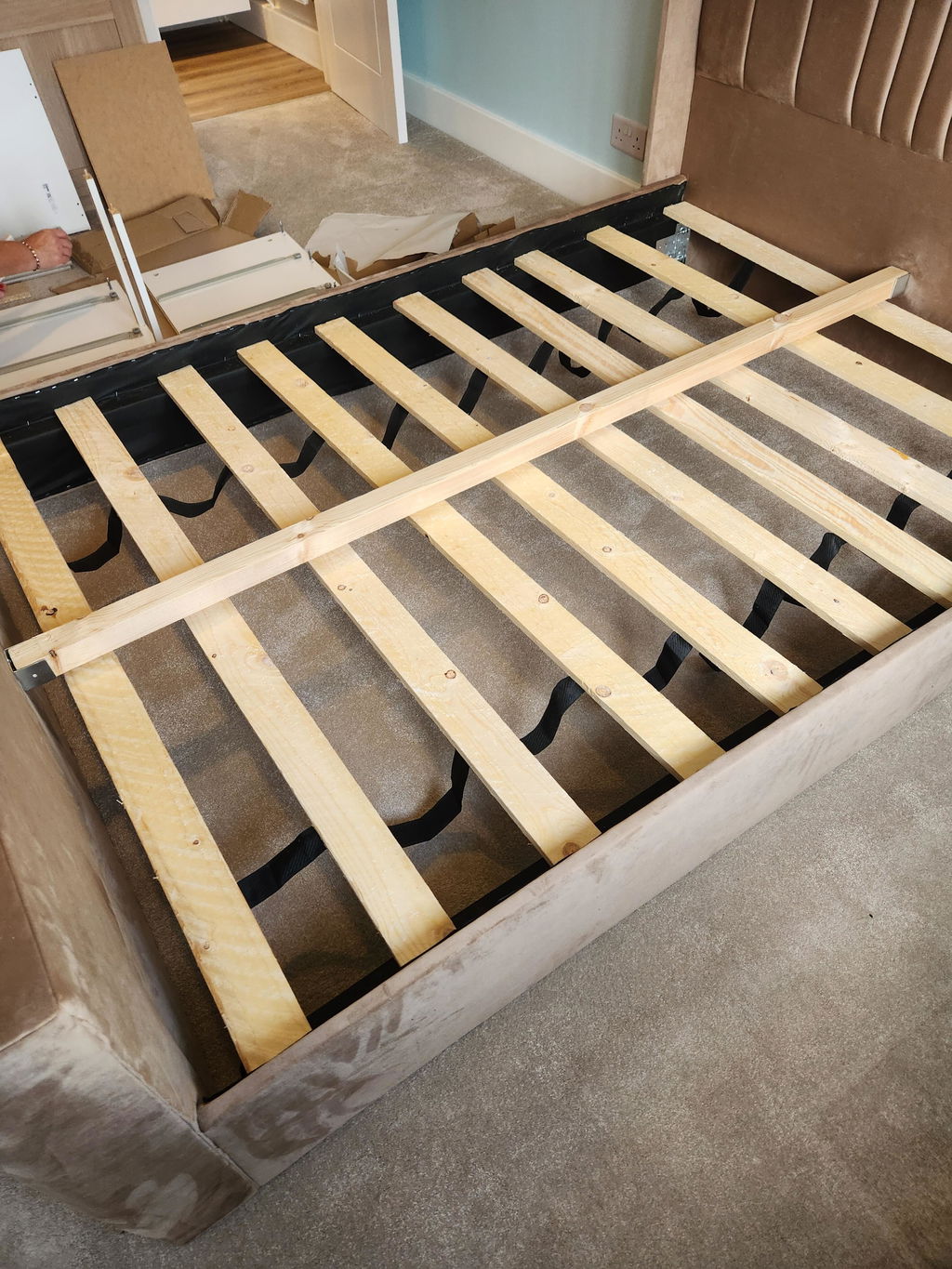
Check for broken slats, sagging divan tops, weak edges or poor ventilation before buying a replacement mattress.
Check Safety and Compliance
UK mattress buyers should be careful with very cheap, unknown or marketplace-only products. In May 2026, a joint National Bed Federation and European Bedding Industries Association investigation tested 101 mattresses sold in the UK and found that 65% of imported mattresses tested failed required fire safety standards or made inaccurate or misleading specification claims.
Look for clear product information, a reputable retailer and evidence of UK fire safety compliance. NBF-approved manufacturers are independently audited for flammability, cleanliness of fillings and accurate product descriptions.
Smart Buying Checklist Before You Order
Before choosing from Divan Factory Outlet’s mattress collection, check:
-
Size: Make sure the mattress matches your bed frame exactly — UK and European sizes can differ.
-
Firmness: Choose based on sleep position, body weight and pressure points, not guesswork.
-
Construction: Compare pocket sprung, memory foam, hybrid, gel and orthopaedic options.
-
Base compatibility: Replace or repair the base if it is sagging or damaged.
-
Delivery and removal: Check whether old mattress disposal or recycling is available.
-
Care instructions: Use a protector and rotate the mattress as recommended.
-
Safety: Buy from a retailer that provides clear product details and compliance information.
Sustainability: What Happens to the Old Mattress?
Mattress disposal is becoming a bigger issue in the UK. The National Bed Federation’s latest end-of-life research found that 56% of mattresses were sent for recycling in 2023, up from an estimated 25% in 2021. However, real recycling actual material recovery was 33% up from 14% in 2020, showing progress but also room for improvement.
When replacing your mattress, ask about recycling or responsible collection. It is better than sending a bulky mattress to landfill, and it supports a more circular UK bed industry.
Conclusion:
A new mattress will not solve every sleep problem, but it can remove a major source of discomfort, overheating, allergy build-up and partner disturbance. The best replacement is not simply the most expensive one or the firmest one. It is the mattress that fits your body, your sleep position, your room your bed base and your long-term comfort needs.
The future of mattress buying in the UK is moving towards better pressure relief, hybrid support, stronger safety checks and more responsible recycling. For shoppers, that is good news: there are more options than ever, but the smartest choice still starts with listening to your body. If your mattress is leaving you tired, stiff or uncomfortable, it may be time to replace it with one that helps you wake up properly rested.
FAQs
How often should you replace a mattress?
Most people should consider replacing a mattress after around seven years, or sooner if it sags, feels uncomfortable or causes disturbed sleep.
Is a firm mattress best for back pain?
Not always. Research often supports medium-firm mattresses for back pain because they balance support with pressure relief.
Can a mattress topper fix an old mattress?
A topper can improve surface comfort, but it cannot fix sagging springs, poor support or a mattress that has lost its structure.
Which mattress is best for couples?
Couples usually benefit from pocket sprung or hybrid mattresses with good motion isolation, edge support and enough space, ideally king size or larger if the room allows.
Should I replace my bed base too?
Yes, if the base is sagging, noisy, broken or incompatible. A poor base can reduce the comfort and lifespan of a new mattress.