How to Choose the Right Mattress for Better Sleep and Everyday Comfort
Choosing a mattress is not just about finding something soft to lie on. It affects how easily your body relaxes, how often you wake during the night, whether you feel stiff in the morning, and how comfortable everyday life feels after years of use.
That matters because many people in the UK are already sleeping less than they need. The NHS says adults generally need 7 to 9 hours of sleep, yet a 2026 UK sleep survey of 2,000 adults found that people get an average of 6.4 hours of actual sleep per night. The same survey found that only 40% rated their recent sleep as good, while poor sleep left 54% with low energy and 51% feeling fatigued the next day.
A mattress cannot fix stress, late night screen use or an irregular routine on its own. But it can remove one of the biggest physical barriers to rest: discomfort. When your spine is poorly supported, your hips sink too far, your shoulders feel compressed or heat builds up under your body, sleep becomes lighter and more broken. That is why choosing the right mattress should be treated as a long-term comfort decision not a quick furniture purchase.
Why Mattress Choice Matters More Than Most People Realise
Poor sleep has a real cost. NICE-linked implementation guidance published in 2026 notes that sleep loss costs the UK an estimated £34 billion annually, equal to 1.86% of UK GDP. The Sleep Charity’s 2024 manifesto also described widespread sleep problems in the UK, reporting that nine in ten people experience sleep issues and that more than 14 million may be living with undiagnosed sleep disorders.
The mattress is not the whole sleep system, but it is the part your body is in contact with for thousands of hours every year. A poor mattress can disturb sleep through:
-
Pressure on shoulders, hips, knees or lower back
-
Heat retention, especially with dense foam or poor airflow
-
Motion transfer from a partner turning over
-
Sagging that pulls the spine out of alignment
-
Weak edge support that makes the usable sleep surface feel smaller
Recent UK sleep data makes this practical rather than theoretical. In 2026, 23% of people said struggling to get comfortable disturbed their sleep, 24% said being too hot was a problem, and 18% cited neck, hip or lower-back pain. More strikingly, 75% said they had been woken by pain or discomfort, with 45% experiencing it at least once a night.
Start With Support, Not Softness
Many shoppers make the same mistake: they judge a mattress by how it feels in the first 30 seconds. Softness feels comforting at first, but long-term comfort depends on support.
Support Keeps Your Spine Neutral
A supportive mattress keeps the body in a natural position. For side sleepers, that means the shoulders and hips can sink just enough while the waist remains supported. For back sleepers, the lower back should feel gently held rather than hollow. For front sleepers, the hips should not dip so low that the spine arches.
Research generally points towards medium-firm mattresses as a strong starting point for many adults. A systematic review indexed on PubMed found that medium-firm mattresses promote comfort, sleep quality and spinal alignment, while newer 2025 research also reported that mattress firmness can significantly influence sleep quality, with medium firmness showing favourable results.
That does not mean everyone should buy the same firmness. “Medium-firm” is a useful starting point, but body weight, sleeping position, pain points and personal preference all change how firm a mattress feels.
Comfort Relieves Pressure
Comfort is the top layer experience: how the mattress cushions shoulders, hips and joints. A mattress can be supportive but uncomfortable if it has too little pressure relief. Equally, it can feel soft and luxurious but fail to support the spine.
Signs your mattress may be wrong include:
-
You wake with numb shoulders, sore hips or lower-back stiffness
-
You sleep better in hotels or guest beds than at home
-
You roll towards the middle because the mattress has dipped
-
You frequently change position to escape pressure
-
You feel rested on some nights but stiff after longer sleep
The goal is not to find the softest mattress. It is to find the mattress that keeps your body relaxed and aligned for the whole night.
Match Your Mattress to Your Sleeping Position
Your sleep position is one of the best clues for choosing firmness and construction.
Side Sleepers Need Pressure Relief Around the Hips and Shoulders
Side sleepers usually need a mattress with enough cushioning to prevent pressure points. If the mattress is too firm, the shoulder and hip can feel jammed against the surface. If it is too soft, the pelvis may sink too far and twist the lower back.
A good option is often a medium or medium-firm mattress with a comfort layer, such as memory foam, pillow-top cushioning or a hybrid design with pocket springs and foam.
Back Sleepers Need Balanced Support
Back sleepers usually do well with medium-firm support. The mattress should fill the natural curve of the lower back without letting the hips drop. Pocket sprung and hybrid mattresses often work well because they combine support with some surface cushioning.
Front Sleepers Usually Need Firmer Support
Front sleeping places extra strain on the neck and lower back, especially if the hips sink. A firmer mattress is usually better because it helps keep the body flatter. Soft foam mattresses can feel comfortable at first, but they may allow too much sinkage through the pelvis.
Combination Sleepers Need Responsiveness
If you move between side, back and front positions, avoid mattresses that feel too “stuck”. Some dense memory foam can make turning harder. A hybrid mattress or pocket sprung mattress with a responsive comfort layer may suit combination sleepers better.
Understand the Main Mattress Types Before You Buy
The UK mattress market is mature but still evolving. Recent market analysis estimated the UK mattress market at USD 1.45 billion in 2026, with online platforms continuing to grow and bed-in-a-box brands reshaping expectations around delivery, trials and compressed packaging. Innerspring mattresses remained a leading category, while foam and online channels are expected to keep expanding.
Here is what the main mattress types mean in real-life terms.
Pocket Sprung Mattresses
Pocket sprung mattresses use individual springs wrapped in fabric pockets. Because each spring moves independently, they usually offer better support and less partner disturbance than traditional open-coil designs.
Best for: couples, people who want bounce, sleepers who prefer a traditional feel, and those who need strong support.
Memory Foam Mattresses
Memory foam moulds to the body and spreads weight evenly. It is good for pressure relief and motion isolation, which helps if one partner moves a lot. The downside is that some memory foam can retain heat, so hot sleepers should look for breathable covers, open-cell foam, gel layers or hybrid construction.
Best for: pressure relief, side sleepers, couples, and people who like a contouring feel.
Hybrid Mattresses
Hybrid mattresses combine springs with foam, gel, latex or other comfort layers. They are popular because they aim to offer the pressure relief of foam with the airflow and support of springs.
Best for: people who want balanced comfort hot sleepers who dislike all-foam mattresses, and couples with different sleep needs.
Latex and Natural Fill Mattresses
Latex is responsive, durable and naturally bouncy. Natural fillings such as wool, cotton or cashmere can help with breathability and temperature regulation. These mattresses often cost more but may appeal to shoppers looking for durability and natural materials.
Best for: hot sleepers, eco-conscious buyers and people who dislike the slow-sinking feel of memory foam.
Open Coil Mattresses
Open coil mattresses use interconnected springs. They are usually more affordable, but they tend to provide less targeted support and more motion transfer than pocket sprung models.
Best for: guest rooms, children’s rooms or short term budget needs.
Do Not Ignore Heat, Motion Transfer and Edge Support
Firmness gets most of the attention but the everyday comfort features often make the biggest difference.
Temperature Control
Being too hot remains a common sleep disruptor. The 2026 UK sleep survey found that 24% of people said heat disturbed their sleep, while the 2024 survey had listed being too hot as the top disruptor at 37%.
Hot sleepers should look for breathable materials, pocket springs, gel-infused foam, open-cell foam, natural fibres or hybrid designs. A mattress protector and duvet choice also matter; even a breathable mattress can feel warm under the wrong bedding.
Motion Isolation for Couples
If you wake whenever your partner turns over, motion isolation is essential. Pocket springs and memory foam usually perform better than open coil mattresses. For couples with very different body weights or firmness preferences a larger mattress or split-tension option can make a noticeable difference.
The same 2026 survey found that among people sharing a bed, 52% were annoyed by snoring, 35% by a partner taking up too much space and 29% by fidgeting. A mattress cannot stop snoring, but it can reduce movement disturbance and make the sleep surface feel less cramped.
Edge Support
Edge support matters if you sit on the side of the bed, sleep close to the edge, share a smaller mattress, or have mobility concerns. Strong edges increase the usable sleep surface and make getting in and out of bed easier.
Base Compatibility
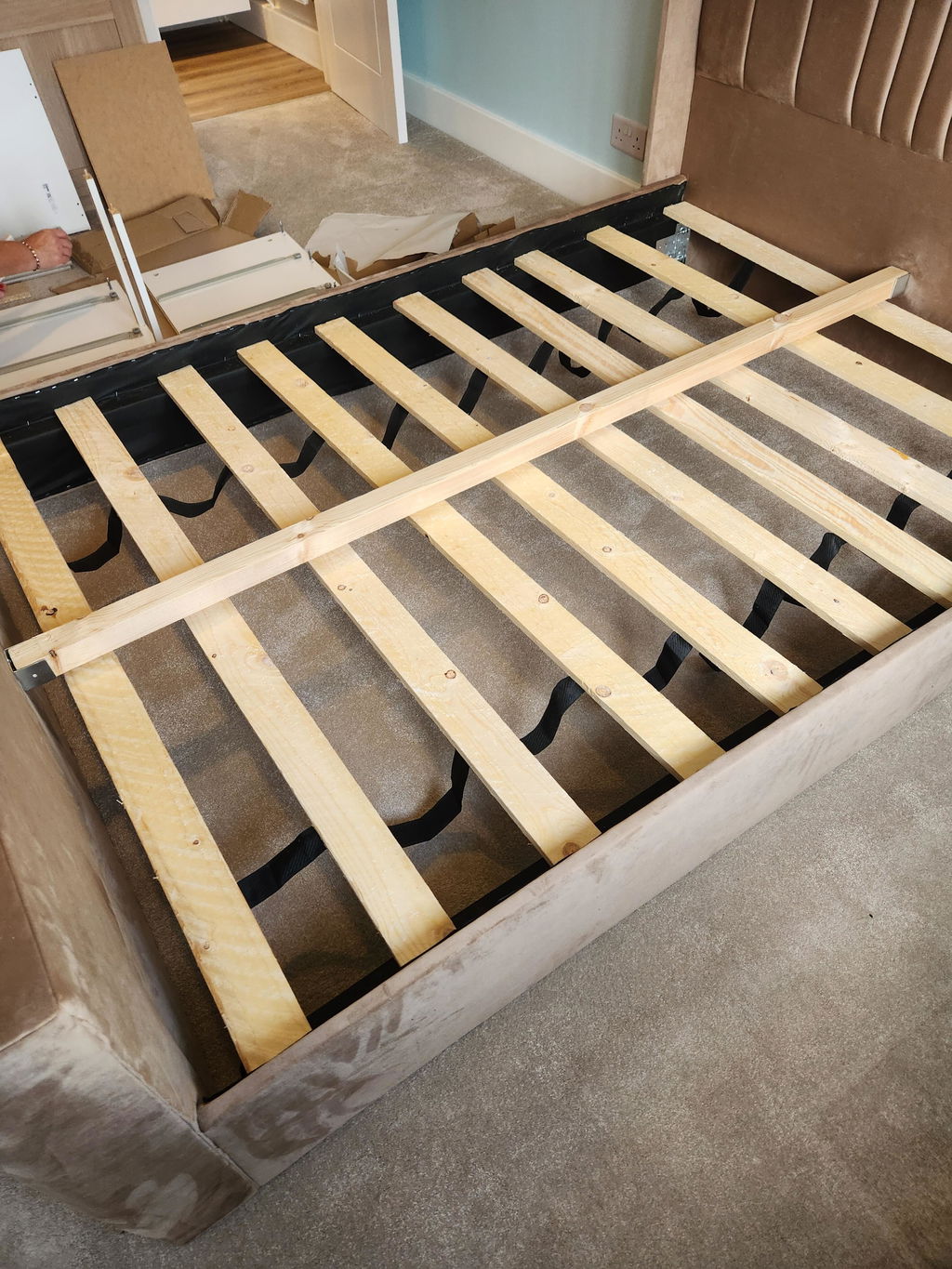
Your mattress and bed base work together. A supportive mattress on a weak, sagging or unsuitable base will not perform properly. Divan bases usually provide even support, while slatted bases need slats close enough together to prevent mattress dipping. Always check whether the mattress is suitable for your existing base before buying.
Know When It Is Time to Replace Your Mattress
A mattress does not become useless overnight. It gradually loses support. That is why many people keep using an old mattress long after their body has started complaining.
In 2026 the average mattress in UK bedrooms was 6.4 years old, up from 6.1 years in 2024. The same survey found that 25% of people had never cleaned their mattress.
You should reassess your mattress if it is approaching seven to eight years old, but age alone is not the only test. Replace it sooner if you notice visible sagging, lumps, noisy springs, poor edge support, worsening allergies or regular stiffness that improves once you get moving.
A mattress protector, regular rotation, vacuuming and allowing the mattress to air can extend its life. Turning only applies if the mattress is double sided many modern mattresses are rotate only.
Think About Sustainability and Safe Disposal
Mattress disposal is becoming a bigger part of the buying decision. The National Bed Federation’s latest end-of-life research found that 56% of mattresses were sent for recycling in 2023 more than double the estimated 25% in 2021. However, real recycling actual material recovery was 33%, showing that progress is happening but the industry still has work to do.
When buying a new mattress, ask whether the retailer offers old mattress collection or recycling. This is especially useful for households replacing a mattress and divan base at the same time.
Check Safety, Labelling and Claims Carefully
In the UK mattress safety is not just about comfort. Fire safety and product labelling matter, especially when buying online. GOV.UK guidance explains that the Furniture and Furnishings Fire Safety Amendment Regulations 2025 came into force on 30 October 2025 while the underlying 1988 regulations set flammability requirements for domestic upholstered furniture supplied in the UK.
Recent product recalls show why this matters. In May 2026 the Office for Product Safety and Standards recalled BHS Lyocell mattress enhancers because they presented a high fire risk and did not meet UK flammability requirements.
Also be cautious with vague marketing claims such as chemical free eco orthopaedic or non toxic unless the retailer explains what those terms mean. In 2025 the National Bed Federation published guidance for the bed trade on chemical claims, product labelling, sustainability claims and avoiding misleading green claims.
A Practical Mattress Buying Checklist
Before choosing from a mattress collection, narrow the decision with a clear checklist:
-
Identify your main problem: back stiffness, overheating, partner movement, pressure points or an old mattress
-
Match firmness to sleep position: softer comfort for side sleepers, medium-firm for many back sleepers, firmer support for front sleepers
-
Choose the right construction: pocket sprung for support, memory foam for pressure relief, hybrid for balance, latex or natural fillings for breathability
-
Check the size: couples usually sleep better with more space; king or super king can reduce disturbance
-
Confirm base compatibility: your mattress should suit your divan, slatted base or bed frame
-
Look at delivery and recycling: old mattress removal can save hassle
-
Check safety and warranty details: labels, fire compliance, care instructions and realistic guarantees all matter
For UK shoppers comparing options a focused mattress collection such as Divan Factory Outlet’s mattresses range can make the process easier because you can compare size, comfort level and mattress type in one place rather than starting from price alone.
Conclusion:
The best mattress is not the most expensive one or the softest one. It is the one that keeps your spine supported, relieves pressure, manages heat, suits your sleep position and works with your lifestyle.
As mattress buying moves further online, shoppers are becoming more informed. The future of mattress selection will likely be more personalised more transparent and more sustainability focused better filtering by sleep style, clearer material claims, stronger compliance checks and more responsible recycling.
A mattress is a long term investment in everyday comfort. Choose carefully and it can help turn sleep from something you struggle through into something your body can rely on.
FAQs
What firmness is best for most people?
Medium-firm is a good starting point for many adults because it balances support and comfort, but side sleepers may need more cushioning and front sleepers often need firmer support.
How often should I replace my mattress?
Reassess it around seven to eight years or sooner if it sags, feels lumpy, causes stiffness or no longer supports you properly.
What mattress is best for back pain?
There is no single best mattress for every back-pain sufferer. A supportive medium-firm or hybrid mattress often works well, but persistent pain should be discussed with a GP or physiotherapist.
Are memory foam mattresses good for sleep?
Yes, especially for pressure relief and reducing partner movement. Hot sleepers should choose breathable memory foam, gel foam or a hybrid design.
What size mattress is best for couples?
A king or super king is usually more comfortable if the room allows. Couples should also consider pocket springs, hybrid construction or split tension if they have different comfort preferences.