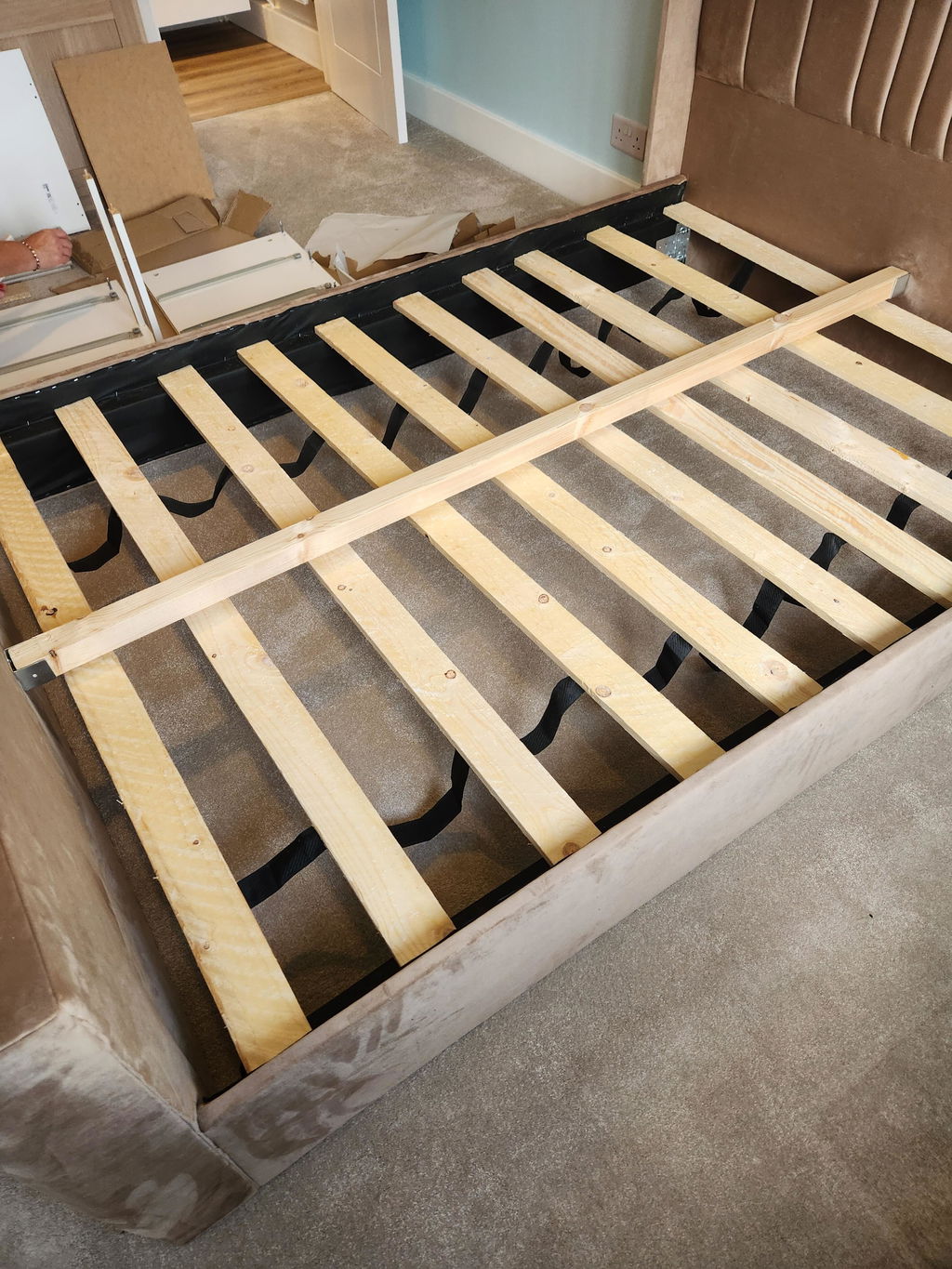
How Much Can You Store Inside an Ottoman Divan Base?
An ottoman divan base sounds simple on paper: lift the mattress platform and use the space underneath. But for most buyers the real issue is not whether there is storage. It is whether that storage is big enough to make a noticeable difference in everyday life. In a small bedroom, that can mean the difference between living with visible clutter and having a room that feels calm, usable and properly finished. Ottoman beds are especially appealing because they use the bed’s full footprint as hidden storage, rather than leaving that space wasted. Dreams describes ottoman beds as giving you a full-size storage area under the bed and its buying guide notes that the whole size of the frame can be used for storage.
For shoppers looking at Divan Factory Outlet’s ottoman divan bases, this matters even more because the range covers sizes from small single through super king, plus both side-lift and end-lift options. That means the answer changes a lot depending on the size you choose and how the base opens.
What actually determines storage capacity
The first thing that decides storage capacity is the bed’s footprint. On Divan Factory Outlet’s Dream Vendor ottoman divan models the listed dimensions run from 75 x 190 cm for a small single, 90 x 190 cm for a single, 120 x 190 cm for a small double, 135 x 190 cm for a double, 150 x 200 cm for a king, and 180 x 200 cm for a super king. Those match standard UK size conventions used across the trade, with the National Bed Federation listing standard UK sizes such as single 90 x 190 cm, double 135 x 190 cm, king 150 x 200 cm, and super king 180 x 200 cm.
That means storage grows fast as you move up in size. A king is not just a little bigger than a double in practical storage terms. It gives you more floor area inside the base, and that extra footprint is what makes bulky items like winter bedding, spare pillows, or soft storage bags much easier to fit. This is why shoppers often feel a real jump in usefulness when they move from a single or double into king territory.
Internal depth matters more than outside height
The second number that matters is the true internal storage depth. Divan Factory Outlet’s Dream Vendor ottoman divan product pages list a 26 cm internal storage depth, while the external base height shown in the dimension guide is 38 cm. That distinction matters because buyers often assume the entire outside height is usable inside, which is rarely how storage beds work in real life. A comparable ottoman divan base page from Dreams also describes 25 cm of storage depth, which reinforces the point that usable inside depth is lower than the total outside base height.
It is also worth treating listed measurements as close working figures rather than absolute engineering numbers. Divan Factory Outlet asks customers to allow a tolerance of about 2 cm, and the National Bed Federation says accepted industry practice for mattresses and divan bases in the UK is plus or minus 20 mm on stated length and width. So the right way to read storage figures is: useful for planning, but not something to measure down to the last millimeter.
A realistic storage estimate by size
Using Divan Factory Outlet’s listed bed dimensions and the stated 26 cm internal storage depth, the gross internal storage space works out roughly like this before allowing for small losses from lift hardware, lining, and the fact that real items do not pack like perfect rectangles.
-
Small single 75 x 190 cm: about 371 liters of gross storage space.
-
Single 90 x 190 cm: about 445 liters.
-
Small double 120 x 190 cm: about 593 liters.
-
Double 135 x 190 cm: about 667 liters.
-
King 150 x 200 cm: about 780 liters.
-
Super king 180 x 200 cm: about 936 liters.
The easiest way to think about those numbers is this: even a single ottoman divan base offers meaningful hidden storage, but a double or king starts to feel more like a serious replacement for overflow bedroom storage. By the time you reach super king, the base can swallow a surprising amount of bulk, especially if most of what you store is soft and compressible. That is why ottoman bases tend to outperform basic under-bed boxes in day-to-day usefulness: the whole footprint is working for you.
What you can realistically fit inside
Storage volume is one thing. Real-life usability is another. In practice, ottoman divan bases work best for items that are bulky but not needed every hour of the day. Retail guidance from Dreams highlights spare bed linen, clothing, shoes, pillows, and other bedroom overflow as natural ottoman-bed storage items, while its buying guide notes that boarded bases are better for heavier boxes and hard items than softer fabric-based alternatives. Divan Factory Outlet also lists its Dream Vendor ottoman divan bases with a solid platform top, which supports that more structured style of storage.
-
Small single and single: ideal for spare sheets, a duvet, extra pillows, guest towels, folded throws, and soft bags of off-season clothes.
-
Small double and double: enough for your full spare bedding set, a winter comforter, several folded blankets, storage bags of clothes, and a few boxed items.
-
King and super king: large enough for bulkier household overflow such as multiple bedding sets, pillows, throws, seasonal clothing, boxed shoes, and some occasional-use luggage if the shape fits comfortably under the lift platform.
The smartest way to pack one is usually with soft-sided storage bags, fabric organizers, or lower-profile boxes rather than one giant rigid container. That lets you use awkward corners better and avoids fighting the shape of the compartment every time you open the base. That last point is practical judgment rather than a manufacturer claim, but it follows naturally from how ottoman compartments are opened and loaded.
The details that change usability
Side lift versus end lift
How much you can store is only half the story. The other half is how easily you can get to it. Dreams says side-opening ottoman beds let you access more of the storage than foot-end opening models, while Divan Factory Outlet specifically describes its side-lift Dream Vendor ottoman as a good solution for a small room and for placement next to a wall. That makes side-lift a strong choice when there is not much clearance at the foot of the bed.
End-lift models make more sense when you have open space at the foot of the bed and want a straight-on view of the compartment. Dreams describes end-lift ottomans as giving you full access to the storage area in one motion, while Divan Factory Outlet’s end-lift Dream Vendor page lists the same 26 cm internal storage depth as the side-opening version. So the difference is usually not storage volume so much as storage access.
There is one more layout point that often gets missed: Dreams notes that very narrow rooms, low ceilings, or slanted ceilings can make side-opening ottomans less practical. So the “best” opening style depends on the room, not just the storage spec.

Mattress weight and base design
Ottoman storage only feels convenient when the lifting mechanism is properly matched to the mattress. Dreams advises buyers to check the weight capacity of gas-piston ottoman beds, and Divan Factory Outlet’s Dream Vendor ottoman specification mentions 600 Newton gas pistons, says the base can lift up to 10 stone, and gives a 75-stone maximum including mattress. In other words, if you pair an ottoman base with a particularly heavy mattress, the storage may still exist, but day-to-day use becomes less effortless unless the mechanism is rated for that load.
Base construction also affects what you should store. Dreams says boarded bases are sturdier and better for heavier items or boxes, while soft shadow-style storage is better suited to pillows, bedding, and other compressible items. Because Divan Factory Outlet’s Dream Vendor ottoman divans use a solid platform top, they are better aligned with mixed storage rather than bedding alone.
Choosing the right ottoman divan base for your room
If the goal is simply to hide spare sheets and a few seasonal extras, even a single or small double can do a useful amount of work. But if you want the bed base to act like serious overflow storage for a primary bedroom, a double or king is where the benefit becomes much more noticeable. The jump in usable footprint is large enough that storage stops feeling like a bonus and starts feeling like part of the room’s furniture plan.
For smaller UK bedrooms, a side-lift ottoman divan can be the smarter pick because access is easier when there is limited space at the foot of the bed. For more open rooms, an end-lift base is often the simplest and cleanest option. Either way, the best buying decision comes from matching three things: the bed size, the opening direction, and the kind of items you actually plan to store. That is the combination that makes an ottoman base feel genuinely useful instead of merely clever in theory.
For retailers and brands, that clarity matters too. When shoppers understand the true internal depth, the size-based volume difference, and the practical impact of side versus end lift, they are far more likely to choose the right base the first time. That is not a published statistic here, but it is a sensible commercial takeaway from the way these product specs differ across models and room layouts.
Conclusion
So, how much can you store inside an ottoman divan base? In practical terms, a lot more than most people expect. On Divan Factory Outlet’s ottoman divan models, the listed internal storage depth is 26 cm, and depending on size, the gross storage volume works out from roughly 371 liters in a small single to about 936 liters in a super king. That is enough to turn the space under your bed from dead space into one of the hardest-working storage zones in the room.
The real takeaway, though, is that capacity alone is not the whole answer. The most useful ottoman divan base is the one whose size suits your storage needs, whose opening direction suits your room, and whose lift mechanism suits your mattress. As more buyers expect bedrooms to deliver both comfort and hidden storage, those practical details will matter more than the label “ottoman” on its own.
FAQs
How deep is the storage inside an ottoman divan base?
On Divan Factory Outlet’s Dream Vendor ottoman divan models, the product pages list 26 cm internal storage depth. A comparable Dreams ottoman divan page lists 25 cm of storage depth, so that is a realistic range for this type of base.
Is a king ottoman divan base worth it for storage alone?
If storage is a major priority, yes. Based on the listed dimensions and 26 cm internal depth, a king offers about 780 liters of gross storage space, which is meaningfully more than a double.
What can I store inside an ottoman divan base?
The best candidates are spare bedding, clothing, pillows, shoes and other bedroom overflow. Boarded bases also make it easier to store boxes and harder-sided items.
Is side lift or end lift better?
It depends on your room. Side lift is often better when the bed is near a wall or there is tight space at the foot, while end lift works well when you have clear room in front of the bed.
Does mattress weight affect how easy the ottoman is to open?
Yes. Dreams says you should check the weight capacity on gas-piston ottoman beds, and Divan Factory Outlet lists piston and load details on its Dream Vendor ottoman specification.