Do Upholstered Beds Attract Dust? What Allergy Sufferers Should Consider
Fabric beds have taken over British bedrooms and it's easy to see why. A padded headboard turns a plain base into the centrepiece of the room, and it's far more comfortable to lean against with a book than a cold metal rail. But if you spend half of spring sneezing or wake up congested most mornings, you've probably hesitated before buying one. All that fabric. Surely it's a dust trap?
It's a fair question, and it deserves a straighter answer than most furniture retailers give. Yes, fabric holds dust in a way that wood and metal don't. Whether that matters for your allergies is a different question, and the honest picture is more reassuring than you might expect.
The honest answer: fabric holds dust but the frame isn't your main problem
Run a finger along a wooden bed rail and any dust sits right on the surface, visible and easy to wipe away. Fabric behaves differently. The weave catches particles and holds onto them, so an upholstered headboard collects dust gradually and hides it well. In that narrow sense, an upholstered bed does attract more dust than a smooth-surfaced frame.
Here's the part that usually gets missed: the frame is a bit-part player in your bedroom's dust story. The vast majority of allergens in any bed live in the mattress, the pillows and the duvet, because that's where you spend seven or eight hours a night shedding skin, breathing out moisture and keeping everything warm. A headboard you lean against for twenty minutes with a cup of tea doesn't compare. Swapping a fabric frame for a metal one while sleeping on an unprotected ten year old mattress is repainting the shed while the roof leaks.
What dust mites need, and why your bedding hands it to them
Dust on its own is mostly harmless. What sets off the sneezing, for most people, is the house dust mite, or rather the waste it leaves behind. Mites thrive where there's warmth, moisture and a steady supply of shed skin cells. Your mattress and pillows offer all of that in abundance. A bed frame offers very little. Nobody sleeps pressed against their headboard, so it stays cooler and drier than anywhere you lie and it collects far less of the skin debris mites feed on.
This is why the frame should sit third on your list of priorities, behind protecting the mattress and washing bedding properly. Get those two right and the question of fabric versus wood becomes far less important than the marketing around hypoallergenic furniture would have you believe.
Where dust really builds up on an upholstered bed
Dust falls, so it gathers on horizontal surfaces. The face of a headboard is vertical, which means it picks up less than people fear. The spots worth watching are more specific:
-
The top edge of the headboard, which acts like a narrow shelf and collects a visible layer if ignored.
-
Deep buttoning, tufting and pleats, where folds in the fabric shelter dust from casual cleaning.
-
The sides of the base near the floor, which catch particles kicked up every time someone walks past or hoovers the carpet.
-
The floor underneath the bed. This is the biggest dust reservoir in most bedrooms, and it has nothing to do with what the frame is made of.
A plain fabric headboard on a divan base has very few of these trouble spots. An ornate deep-buttoned design with an open gap underneath has several. Two upholstered beds can behave very differently, which is worth remembering when you shop.
Choosing an upholstered bed when you have allergies
Fabrics that make life easier
Tightly woven fabrics give dust fewer places to settle and release it more willingly when vacuumed. Most modern polyester and linen-look weaves fall into this camp. Faux leather goes a step further, since you can wipe it down the same way you would a wooden frame. At the other end sit deep-pile textures like chenille and bouclé, which feel wonderful but hold onto particles more stubbornly. They're not off limits for allergy sufferers, they just demand a regular vacuuming habit. And if a bed comes with removable, washable covers, that feature is worth paying extra for.
Design details worth a second look
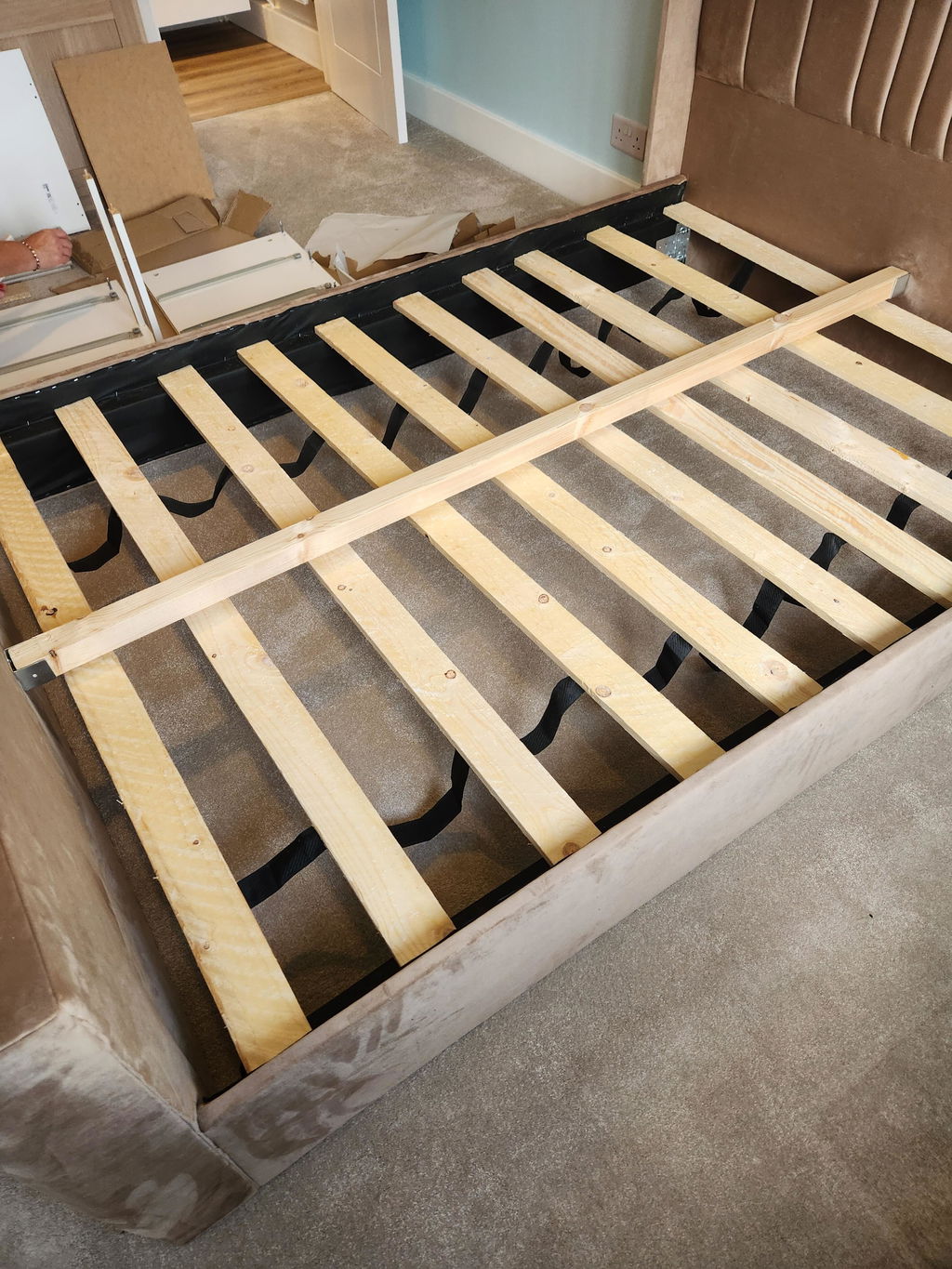
An ottoman or divan-style base quietly solves the under-bed problem. Because the base sits flush to the floor, or lifts to reveal a sealed storage compartment, there's no dark cavity for dust to gather in, and anything stored inside stays clean instead of collecting a grey film in open boxes. The headboard shape matters too: a plain or gently padded panel is a thirty-second vacuum job, while heavy tufting takes patience. If you prefer a frame on legs, check that your vacuum fits underneath, because "hard to reach" turns into never cleaning surprisingly fast. You'll find all of these styles across most upholstered bed frame ranges so an allergy-friendly choice doesn't have to be a boring one.

A weekly routine that keeps dust under control
None of this needs to take over your life. Kept up regularly, the whole routine takes about fifteen minutes a week:
-
Vacuum the headboard, base and any fabric surfaces with the upholstery attachment, ideally in a vacuum with a HEPA filter so fine particles stay in the machine rather than blowing back into the room.
-
Wash bedding weekly at 60°C. Cooler washes freshen the fabric; a hot wash is what deals with mites.
-
Fit allergen-proof encasements on the mattress and pillows. This single step outweighs everything else on this list.
-
Air the room daily and avoid drying laundry on the bedroom radiator, especially in winter. Mites struggle in dry air, and British homes already give them more humidity than they deserve.
-
If you steam clean the fabric, do it sparingly and let everything dry completely. Damp padding is a worse outcome than dusty padding.
-
Once a month, pull the bed out or lift the ottoman lid and vacuum the space beneath.
When a fabric bed isn't the right choice
This is the section most bed retailers leave out. If you have a severe, diagnosed dust mite allergy, or asthma that flares at night even after encasing the mattress, hot washing the bedding and keeping the room dry, a wipeable wooden or metal frame removes one more variable. When you manage symptoms every day, that simplicity has real value. The same applies if you know, hand on heart, that the headboard will never see a vacuum. Fabric rewards a little attention and punishes total neglect. For everyone else, which is most people with hay fever or mild dust sensitivity, the frame material matters far less than the habits around it.
Final thoughts
So, do upholstered beds attract dust? More than metal or wood, yes. Do they deserve their reputation as an allergy sufferer's enemy? Not really. The mattress, the bedding and the humidity of the room decide how your nose feels in the morning. The frame is a supporting detail you can manage with a weekly once-over.
If you're buying with allergies in mind, the formula is simple: a tighter weave, a simpler headboard shape, a base that closes off the space beneath, and removable covers if you can get them. Pair that with an encased mattress and a hot wash cycle, and there's no reason to give up the comfort of a fabric bed for the sake of your sinuses.
Frequently asked questions
Do upholstered beds cause dust allergies?
No. They can hold dust that aggravates an existing dust mite allergy, but the mites themselves live overwhelmingly in mattresses, pillows and duvets. An unprotected mattress will cause far more trouble than any fabric frame.
Which upholstery fabric is best for allergy sufferers?
Tightly woven synthetics or faux leather. Both trap fewer particles and give them up easily when vacuumed or wiped. Deep-pile fabrics like chenille and bouclé need more frequent cleaning to stay allergy friendly.
How often should I vacuum a fabric headboard?
Once a week with the upholstery attachment is enough for most homes, ideally using a vacuum with a HEPA filter. Give extra attention to buttoned or tufted areas where dust shelters in the folds.
Can I steam clean an upholstered bed frame?
Occasionally, yes, if the care label allows it. The important part is drying: open a window and let the fabric and padding dry out fully, because trapped moisture encourages mites and mould.
Are ottoman and divan beds better for dust than frames on legs?
For dust control, yes. A base that sits flush to the floor or opens into sealed storage removes the under-bed cavity where most bedroom dust collects, and it keeps whatever you store inside clean as well.