A Simple Guide to Choosing a Stylish and Functional Guest Bed
A good guest bed used to be a nice extra. In 2026 it is much closer to a space planning decision. Homes have been getting tighter not bigger: NAHB reported that the average size of a new home fell to 2,411 square feet in 2023 the smallest in 13 years and buyers said they were looking for homes around 2,070 square feet.
By the third quarter of 2025 NAHB said the average new single-family home measured 2,405 square feet with a median of 2,176 square feet. At the same time, more buyers are choosing quality over sheer size and more homes are being designed around flexible layouts, accessory dwelling units and micro housing. In AIA’s 2025 Home Design Trends Survey, net popularity gains were especially strong for accessory dwellings and rental units at 62% and for micro-housing options at 31%.
That shift matters because the guest room is rarely just a guest room now. It may also be an office a reading room a nursery a workout space or a short term rental. The right guest bed has to look good, sleep well and justify every inch it occupies. The wrong one does the opposite: it swallows floor space, looks bulky and still leaves visitors waking up stiff.
Start with the real job the guest bed needs to do
Before you compare fabrics, headboards, or frame shapes, answer one question honestly: what is this bed for most of the year?
If it will be used only a handful of nights, you can prioritize flexibility and visual lightness. If you host parents, adult friends or paying guests regularly you should think more like a hotel buyer and less like a stylist. That usually means choosing a sturdier frame, a proper mattress, and a size adults can actually sleep on without feeling like they are improvising.
A useful rule is to buy for the most demanding realistic use case not the most flattering one. A slim daybed may photograph beautifully but if your guests are usually couples in their 50s, it is probably the wrong answer. On the other hand a bulky queen bed in a room that also needs to function as a daily office can make the whole space feel compromised.
Match the bed size to the room not to wishful thinking
Standard mattress sizes are fixed and they set the boundaries for everything else in the room. Sleep Foundation lists twin at 38 by 75 inches full at 54 by 75 inches and queen at 60 by 80 inches. It also notes that mattress height is not standardized, which matters when you are buying a trundle, daybed, sofa bed or any frame with clearance limits.
Here is the simplest way to think about sizing
-
Twin works best for one child one teen or one occasional adult guest in a compact room.
-
Full is often the smartest compromise for a true guest room in a smaller home because it gives one adult room to spread out and can handle two people in a pinch.
-
Queen is the best choice when you host couples often or want the guest room to feel genuinely hotel like.
The mistake many people make is sizing the bed first and the room second. A guest bed is too large when the room feels like circulation has become an afterthought. If guests cannot place a bag comfortably reach the wardrobe without sidestepping or open the door without feeling squeezed the room is telling you the bed is oversized.

Choose a frame style that earns its floor space
This is where style and function really meet. The best looking guest bed is usually the one that solves two problems at once.
Best guest bed styles by use case
-
Daybed: Best for home offices, reading rooms and narrow rooms. It looks more like seating during the day so the room stays versatile.
-
Trundle bed: Excellent for kids’ sleepovers, siblings or friends staying together. You get a second sleep surface without permanently sacrificing floor area.
-
Sofa bed: Useful when the room is mainly a lounge or TV room and sleeping is secondary.
-
Wall bed or Murphy bed: Often the strongest option for a genuine flex room because it gives the floor back when the bed is closed.
-
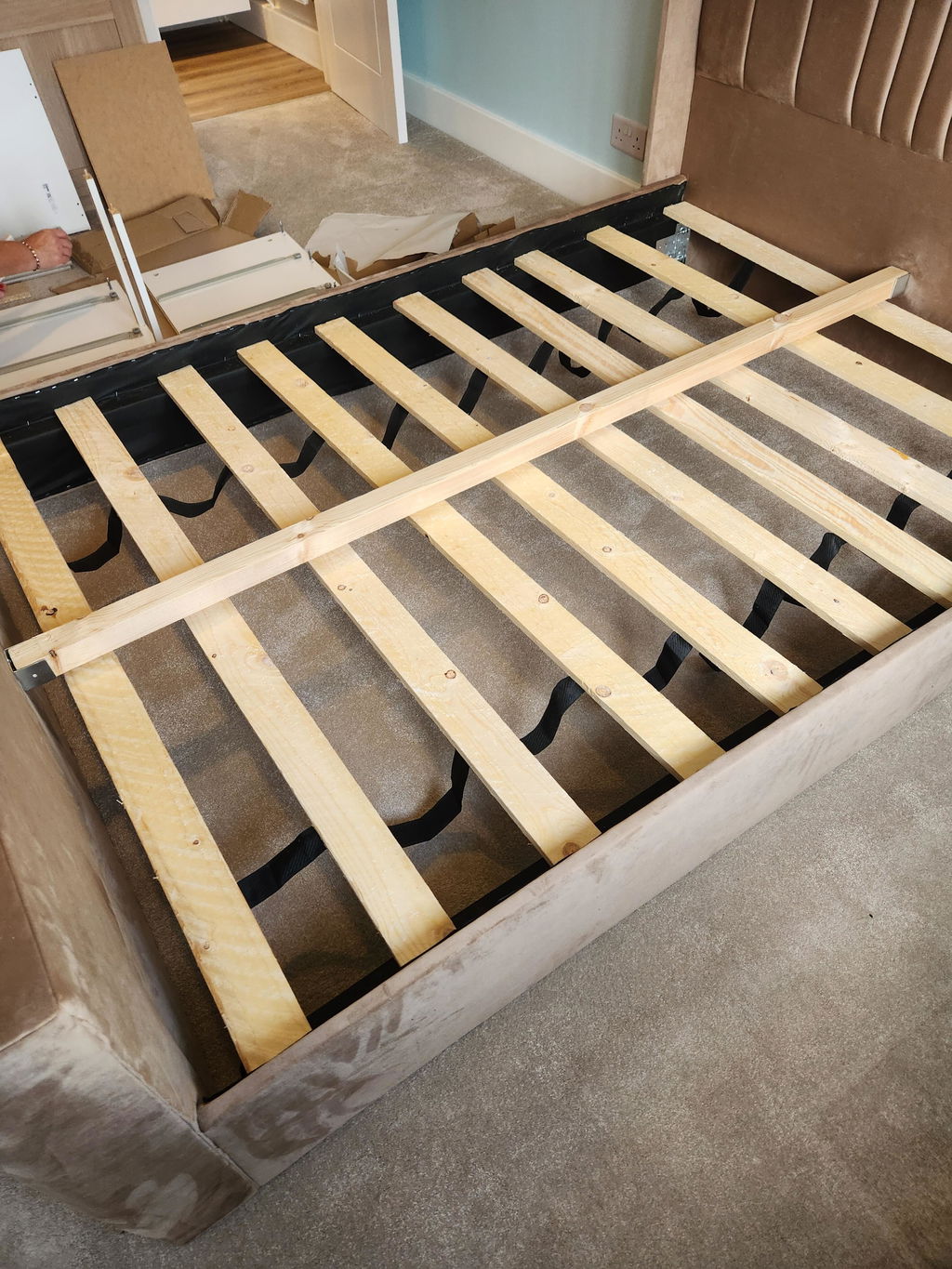
Storage bed or ottoman bed: Ideal when you need space for spare bedding, seasonal linens, or guest towels inside the bed itself.
This matters more than ever because newer housing patterns are pushing rooms to do multiple jobs. AIA’s 2025 survey showed strong growth in accessory dwellings and rental units as well as continued interest in finishing basements and attics both of which point to spaces being adapted rather than built out endlessly.
In practical terms that means the frame should not just fit the room. It should improve how the room behaves when nobody is sleeping there.
Do not save money in the wrong place the mattress
A stylish frame gets attention. The mattress determines whether guests sleep well enough to remember the room positively.
Research points in a fairly consistent direction here. A 2025 study indexed by PubMed found that mattress firmness significantly influenced sleep quality with medium firmness producing the best overall outcomes for people with a moderate BMI. A CADTH evidence review hosted by NCBI also summarized multiple studies in which medium-firm mattresses improved sleep quality one study in the review reported a 55% improvement in sleep quality after 28 days.
For most guest rooms that makes medium firm the safest default. It is the least risky choice when you do not know whether the next guest will be a side sleeper, a back sleeper, younger, older, lighter or heavier. Very soft beds can feel luxurious for five minutes and tiring by morning. Very firm beds tend to divide opinion fast.
Which mattress type usually makes the most sense?
Sleep Foundation groups mainstream mattresses into five categories: innerspring, foam, hybrid, latex, and airbed. Its 2025 queen-size guide puts typical retail ranges at roughly $600 to $1,100 for innerspring, $900 to $1,300 for foam, $1,300 to $2,000 for hybrid, $1,600 to $2,000 for latex, and $2,000 to $2,400 for airbeds.
That pricing structure is useful because it helps clarify value:
-
Innerspring is often the practical choice for occasional guest use lower entry price, easier airflow and a familiar feel.
-
Foam can work well when motion isolation matters, but some all foam designs retain more heat.
-
Hybrid is the sweet spot for many households because it blends cushioning with easier movement and better edge support.
-
Latex is attractive when durability and temperature neutrality matter more than budget.
If your guest room runs warm, construction matters. Sleep Foundation notes that hybrid and innerspring mattresses are typically among the best for temperature regulation because air moves through their coil layers, while latex also tends to sleep cooler than memory foam.
Style should feel intentional not overdesigned
The most successful guest beds usually look calmer than the rest of the house, not louder. Guests do not need a statement bed as much as they need a room that feels easy to understand.
A few design principles hold up well in real homes:
Keep the silhouette right for the room
In smaller rooms low profile beds usually look more expensive because they do not visually crowd the walls. In larger rooms a taller upholstered headboard can add warmth and make the room feel finished.
Let texture do more than color
If the room already has art, curtains and accessories choose a guest bed in a simple neutral tone and create style with texture linen look upholstery, channel stitching, warm wood or matte metal.
Buy finishes that survive real guests
This is where many stylish choices go wrong. Delicate fabrics and hard to clean headboards look good on day one and stressful by month six. If the room is used often washable covers, practical upholstery and darker or forgiving mid-tones usually age better than trend led fabrics that show every mark.
Build comfort into the details
A guest bed feels more premium when the setup is thoughtful: a reading light a small surface for a phone and water and bedding that feels layered rather than sparse. Those details often matter more than buying a more dramatic frame.
Why this choice matters for hosts and small accommodation businesses
For homeowners a guest bed affects comfort and space efficiency. For hosts, it also affects reputation.
Airbnb’s host guidance says listings should deliver a reliable, high quality experience and accurately describe features including the setup of the listing and the size of beds. It also notes that repeated low ratings can indicate a host is not meeting guest expectations of quality. Separately a 2025 report highlighted by PhocusWire and Expedia Group said short term rental guests are increasingly expecting a higher standard of quality and service.
That means a guest bed is not just decor in a rental context. It is part of the product. A bed that looks attractive in photos but feels cramped, overheats or sags quickly can damage reviews more than many hosts expect.
A practical checklist before you buy
Use this quick filter before you commit:
-
Who usually sleeps here? One adult, couples, children or a mix?
-
How often will it be used? A few times a year, monthly or every week?
-
What does the room do the rest of the time? Office, lounge, studio or dedicated guest room?
-
Do you need built in storage? Bedding storage can change the smartest frame choice.
-
Is the mattress included and what thickness will the frame allow? Thickness is not standardized so this matters more than many buyers realize.
-
Will the bed still leave the room usable? Especially important for sofa beds, wall beds, and trundles.
-
How easy is it to clean and maintain? Important for both family use and rentals.
-
Will an adult actually sleep well on it for two or three nights? If the answer feels uncertain keep shopping.
Three smart buying routes for common real world situations
If the room is a small office guest room the best answer is often a daybed or wall bed in a full size with a simple upholstered or wood finish that reads as furniture not spare-room overflow.
If the room is a true spare bedroom a queen storage bed with a medium firm hybrid mattress is often the most balanced solution. It looks substantial, handles couples better and keeps extra bedding out of sight.
If the room is part of a short term rental or frequent hosting setup, durability matters as much as appearance. A straightforward full or queen frame easy clean upholstery and a mattress designed for medium firm comfort are usually better business decisions than trend driven shapes or very soft sleep surfaces. Guest expectations are rising, and the bed is one of the first places they will notice whether quality matches the photos.
Conclusion
Choosing a stylish and functional guest bed is really about making one decision well: what kind of comfort does this room need to deliver without wasting space the rest of the year?
The data points all in the same direction. Homes are staying compact buyers increasingly prefer better-designed smaller spaces and flexible living formats such as ADUs and micro-housing continue to gain relevance. In that environment the best guest bed is rarely the biggest or the trendiest. It is the one that fits the room properly uses the right frame type for the way the space lives and pairs a good looking design with a genuinely sleepable mattress.
The future of guest room furniture is not more furniture. It is smarter furniture. And the households that get this right will end up with rooms that feel bigger work harder and welcome people better.
FAQs
What is the best type of guest bed for a small room?
A daybed, trundle bed or wall bed is usually best for a small room because it saves space while still giving guests a comfortable place to sleep.
Which guest bed size is most practical for most homes?
A full-size guest bed is often the most practical choice because it offers more comfort than a twin without taking up as much room as a queen.
Is a queen bed too large for a guest room?
Not always. A queen bed works well if you often host couples or have a dedicated guest room with enough space to move around comfortably.
What mattress firmness is best for a guest bed?
A medium firm mattress is usually the safest option because it suits a wider range of sleeping styles and body types.
Should I choose style or comfort when buying a guest bed?
You should aim for both but comfort should come first. A stylish guest bed looks great, but it will not leave a good impression if your guests do not sleep well.
Are storage beds a good option for guest rooms?
Yes, storage beds are a smart option because they help you keep spare bedding, pillows, and seasonal linens neatly stored without needing extra furniture.
What is the difference between a daybed and a sofa bed?
A daybed looks more like a bed that can also work as seating, while a sofa bed functions mainly as a sofa and folds out into a bed when needed.
How can I make a guest bed look more stylish?
Choose a bed with a clean design use layered bedding add cushions or a throw and match the bed frame with the overall color scheme of the room.
What should I consider if the guest room is also a home office?
Pick a bed that supports multi use living such as a wall bed or daybed so the room stays practical and does not feel overcrowded during the day.
Why is choosing the right guest bed important?
The right guest bed improves comfort, helps the room stay functional and makes better use of available space, which is especially important in modern homes where every room often serves more than one purpose.